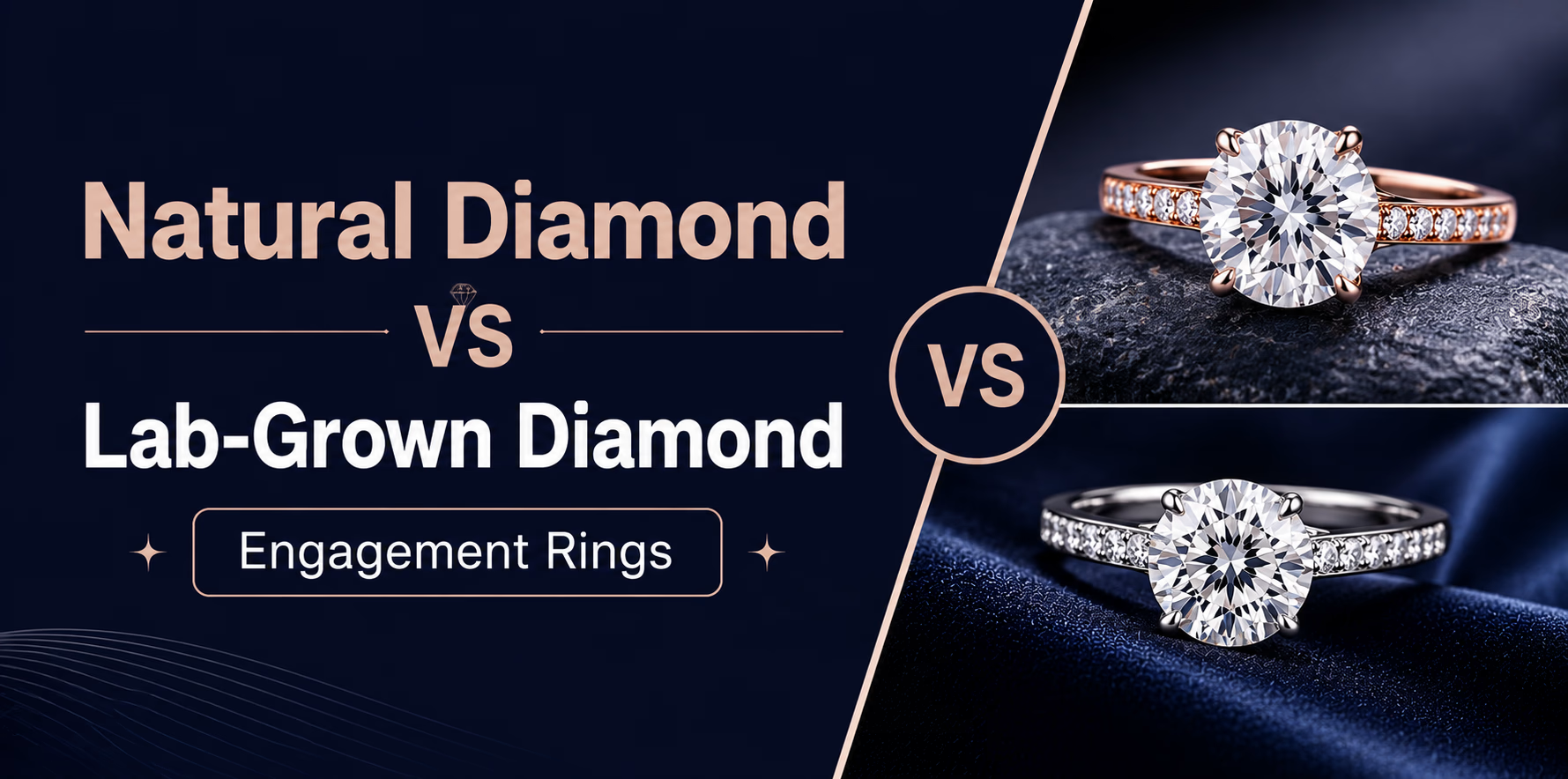
Natural Diamond vs Lab-Grown Diamond Engagement Rings
Choosing between a natural diamond and a lab-grown diamond has become one of the biggest decisions in modern engagement ring shopping. A few years ago, most buyers automatically leaned toward natural diamonds because they were seen as the traditional and “real” option. In 2026, however, the conversation has changed completely.
Today, couples are no longer choosing engagement rings based only on tradition. They are comparing value, appearance, sustainability, customization flexibility, and long-term practicality before making a decision.
The truth is that both natural and lab-grown diamonds have their own advantages. The best choice depends on personal priorities, lifestyle, emotional preference, and budget—not social pressure.
This guide breaks down the real differences between lab grown vs natural diamond engagement rings in a simple, human, and practical way.
Key Takeaway
- Both natural and lab-grown diamonds are real diamonds
- Natural diamonds prioritize rarity, tradition, and luxury heritage
- Lab-grown diamonds prioritize affordability, size, and customization flexibility
- Sparkle depends more on cut quality than origin
- The best diamond for engagement ring buyers depends on personal priorities, not market pressure
Understanding the Difference Between Natural and Lab-Grown Diamonds
One of the biggest misconceptions in the jewelry market is that lab-grown diamonds are “fake” diamonds.
They are not.
Lab-grown diamonds have:
- The same physical structure
- The same chemical composition
- The same visual brilliance
- The same hardness level as natural diamonds
The primary difference is how they are created.
Natural Diamonds
Natural diamonds form deep inside the Earth over billions of years under extreme heat and pressure. They are mined from natural geological deposits and are valued for their rarity and natural origin.
Lab-Grown Diamonds
Lab-grown diamonds are created inside advanced laboratories using technology that replicates the natural diamond-growing process. They are real diamonds, not simulants like cubic zirconia or moissanite.
Visually, most people cannot tell the difference between natural and lab-grown diamonds without professional equipment.
Why Lab-Grown Diamonds Are Growing Rapidly in 2026
Lab-grown diamonds have become one of the fastest-growing categories in engagement ring jewelry.
Modern buyers are increasingly choosing them because they offer:
- Better affordability
- Larger diamond size within budget
- More customization flexibility
- Ethical and sustainability-focused appeal
- Strong visual beauty without extreme pricing
Many couples today would rather choose:
- A larger well-cut lab-grown diamond
instead of - A smaller natural diamond with a much higher price tag
This shift is especially common among younger buyers who prioritize practicality and customization over traditional luxury standards.
Natural Diamond Engagement Rings
Natural diamonds continue to hold strong emotional and luxury appeal in the engagement ring market.
Why Buyers Still Choose Natural Diamonds
For many people, natural diamonds carry emotional and symbolic value that goes beyond appearance.
Buyers often choose natural diamonds because of:
- Their rarity
- Geological history
- Traditional luxury perception
- Long-term prestige
- Emotional significance
Some buyers also appreciate the idea that natural diamonds were formed naturally over billions of years, which adds to their sentimental value.
Characteristics of Natural Diamonds
Natural diamonds are known for:
- Traditional luxury positioning
- Strong resale perception
- Long-standing cultural significance
- Unique natural formation patterns
- Higher rarity compared to lab-grown options
They are especially popular among buyers who:
- Prefer heritage luxury
- Value long-term symbolic importance
- Want traditional engagement ring experiences
- Appreciate rarity and exclusivity
Pricing Reality of Natural Diamonds
Natural diamonds are significantly more expensive due to:
- Mining costs
- Limited supply
- Global demand
- Certification systems
- Retail and branding markups
Even small increases in:
- Carat size
- Clarity
- Color grade
can dramatically increase pricing.
This is why natural diamond engagement rings often become substantially more expensive at larger carat weights.
Lab-Grown Diamond Engagement Rings
Lab-grown diamonds are changing the modern engagement ring market because they offer real diamond beauty at far more accessible pricing.
Why Buyers Love Lab-Grown Diamonds
Lab-grown diamonds allow buyers to:
- Maximize visual size
- Improve cut quality within budget
- Customize rings more freely
- Focus on aesthetics rather than rarity pricing
Many modern couples prioritize:
- Appearance
- Budget balance
- Smart spending
- Sustainability
over traditional rarity value.
Characteristics of Lab-Grown Diamonds
Lab-grown diamonds have become one of the most preferred choices for modern engagement rings because they combine real diamond beauty with greater affordability and flexibility. In 2026, many buyers are choosing lab-grown diamonds not because they are “cheaper,” but because they allow more freedom in ring design, stone size, and overall customization.
Lab-grown diamonds offer:
- Real diamond composition with the same physical and chemical properties as natural diamonds
- Excellent brilliance and sparkle that closely matches high-quality natural diamonds
- Better affordability compared to mined diamonds of similar specifications
- More accessible larger carat sizes within practical budgets
- Ethical sourcing appeal for buyers concerned about traditional mining practices
- Greater customization flexibility across different engagement ring styles and settings
One of the biggest advantages of lab-grown diamonds is budget efficiency. Because pricing is significantly lower than natural diamonds, buyers can often prioritize overall ring quality instead of compromising between size, design, and craftsmanship.
As a result, many couples choose:
- Higher quality cuts with stronger brilliance and light performance
- Larger center stones that create more visual presence
- More detailed settings such as hidden halos, pavé bands, or vintage-inspired designs
- Better clarity and color grades without dramatically increasing total pricing
- Fully customized engagement rings tailored to personal style preferences
This flexibility has made lab-grown diamonds especially popular among modern buyers who want visually impressive engagement rings while maintaining better financial balance and design freedom.
Pricing Advantage of Lab-Grown Diamonds
One of the biggest reasons lab-grown diamonds dominate modern engagement ring trends is pricing efficiency.
Compared to natural diamonds, lab-grown diamonds can:
- Cost significantly less
- Offer larger appearance within the same budget
- Reduce overall engagement ring pricing substantially
This allows couples to prioritize:
- Better ring design
- More detailed customization
- Premium settings
- Higher visual impact
while staying within comfortable budgets.
Lab Grown vs Natural Diamond: Side-by-Side Comparison
| Feature | Natural Diamond | Lab-Grown Diamond |
| Origin | Naturally formed underground | Created in laboratory |
| Chemical Structure | Real diamond | Real diamond |
| Visual Appearance | Same brilliance | Same brilliance |
| Rarity | High | Lower |
| Pricing | Higher | More affordable |
| Resale Perception | Traditionally stronger | Developing market |
| Sustainability Appeal | Mining-dependent | More sustainability-focused |
| Customization Flexibility | Budget-limited | Higher flexibility |
| Popularity in 2026 | Traditional luxury buyers | Modern practical buyers |
Which Is the Best Diamond for Engagement Ring Buyers?
The answer depends entirely on personal priorities.
Natural Diamonds Are Best For Buyers Who:
- Prefer traditional luxury
- Value rarity and symbolism
- Want long-standing prestige
- Appreciate natural geological history
- Prioritize emotional heritage value
Lab-Grown Diamonds Are Best For Buyers Who:
- Want larger diamonds within budget
- Prioritize visual beauty and practicality
- Prefer modern sustainable alternatives
- Want better customization flexibility
- Focus on smart spending and value
Most Popular Trends in 2026
Modern engagement ring buyers are increasingly choosing:
- Oval lab-grown diamonds
- Hidden halo settings
- Minimal solitaire engagement rings
- Elongated cushion cuts
- Thin band designs
- Sustainable engagement ring options
At the same time, natural diamonds continue to dominate:
- Luxury heritage jewelry
- High-end traditional engagement rings
- Investment-focused purchases
The market is no longer about one option replacing the other.
Instead, buyers are selecting diamonds based on lifestyle and priorities.
Common Misconceptions About Lab-Grown Diamonds
“Lab Diamonds Are Fake”
False.
Lab-grown diamonds are chemically and physically real diamonds.
“Natural Diamonds Sparkle More”
False.
Sparkle depends primarily on cut quality, not whether the diamond is natural or lab-grown.
“Lab Diamonds Look Cheap”
False.
High-quality lab-grown diamonds can look identical to natural diamonds visually.
“Natural Diamonds Are Always Better”
Not necessarily.
The better choice depends on:
- Budget
- Personal values
- Design priorities
- Emotional preference
Common Mistakes Buyers Make
Paying Only for Rarity
Some buyers overspend on natural diamonds while sacrificing overall ring quality or size.
Ignoring Long-Term Budget Balance
Choosing a ring that creates financial pressure can reduce the overall joy of the engagement experience.
Focusing Only on Social Perception
The best engagement ring should reflect the couple’s priorities—not outside opinions.
Overlooking Customization Possibilities
Lab-grown diamonds often allow significantly more flexibility in:
- Ring design
- Stone size
- Setting detail
- Overall customization
Final Thoughts
The conversation around lab grown vs natural diamond engagement rings is no longer about which option is “real” or “better.”
It is about what matters most to the person wearing the ring.
Some couples value rarity and natural history. Others prioritize flexibility, practicality, and visual impact within a comfortable budget. Neither choice is wrong.
The best engagement ring is the one that feels meaningful, wearable, and emotionally connected to your relationship.
In 2026, more couples are moving toward personalized engagement ring experiences instead of traditional one-size-fits-all retail shopping. Working directly with experienced jewelry manufacturers such as Nakassi allows buyers to explore both natural and lab-grown diamonds with greater transparency, customization flexibility, and better control over overall engagement ring pricing and design.
FAQs
Are lab-grown diamonds real diamonds?
Yes. Lab-grown diamonds have the same chemical and physical properties as natural diamonds.
Which is more expensive: lab-grown or natural diamonds?
Natural diamonds are generally much more expensive because of rarity, mining costs, and traditional market structure.
Do lab-grown diamonds sparkle differently?
No. Sparkle depends mainly on cut quality rather than diamond origin.
Which diamond is best for engagement rings?
The best option depends on budget, values, customization preferences, and emotional priorities.
Are natural diamonds better investments?
Traditionally, natural diamonds have stronger resale perception, though actual resale markets vary significantly.
Why are younger buyers choosing lab-grown diamonds?
Many younger buyers prioritize affordability, sustainability, larger stone size, and customization flexibility
Can people visually tell the difference between natural and lab-grown diamonds?
Usually no. Most differences require specialized gemological equipment to identify.
Are lab-grown diamonds durable for everyday wear?
Yes. Lab-grown diamonds have the same hardness and durability as natural diamonds.
Do celebrities use lab-grown diamonds?
Yes. Many modern celebrities and influencers now wear lab-grown diamonds for sustainability and customization reasons.
Can engagement rings be customized with both diamond types?
Yes. Modern custom engagement rings can be created using either natural or lab-grown diamonds depending on personal preference and budget.