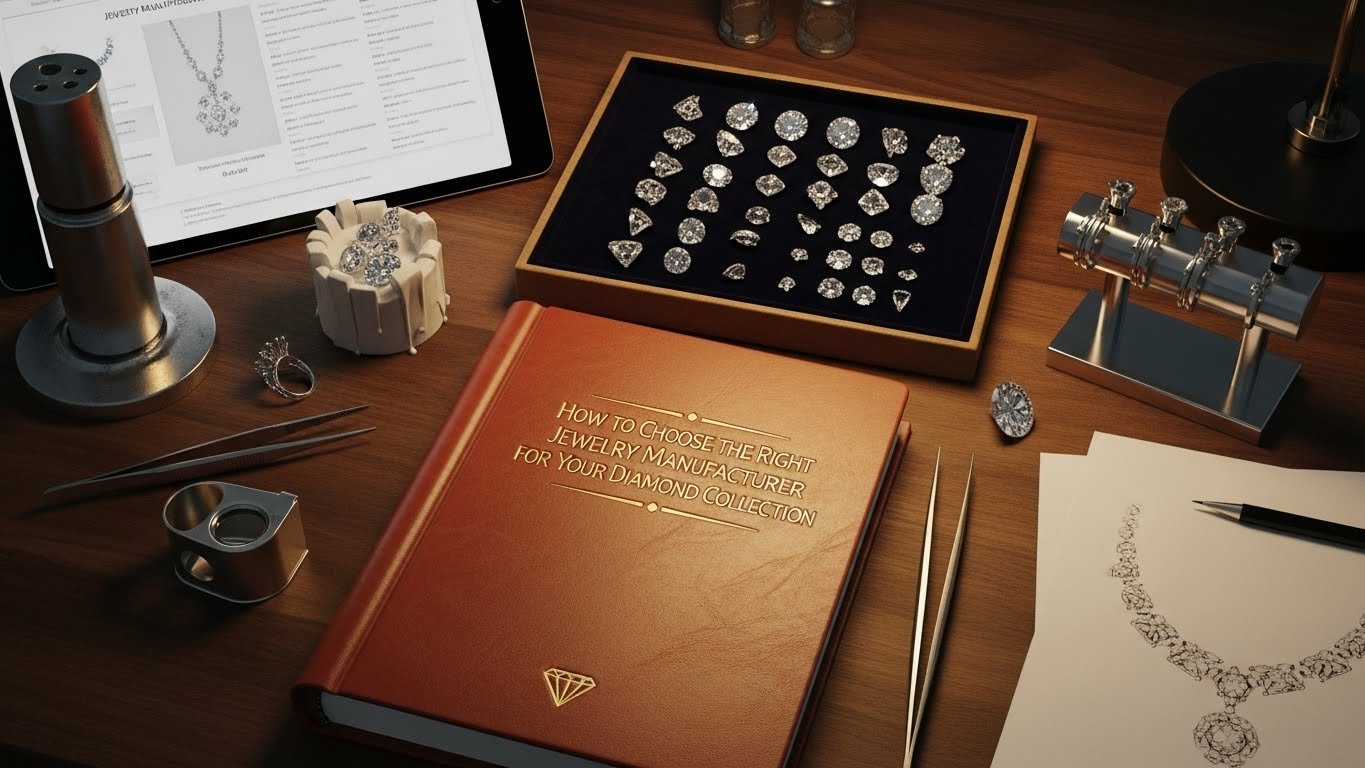
How to Choose the Right Jewelry Manufacturer for Your Diamond Collection
Choosing the right jewelry manufacturer is one of the most important strategic decisions for any diamond jewelry business operating in today’s global market. Whether you are a startup brand launching your first collection, a retailer expanding into private label, or an established wholesaler scaling production across multiple regions, your manufacturer directly impacts product quality, consistency, profitability, and brand reputation.
With increasing demand for natural diamonds, lab grown diamonds, and moissanite jewelry worldwide, manufacturers are expected to deliver not only craftsmanship but also transparency, ethical sourcing, customization flexibility, and scalable production. This guide is designed specifically for B2B buyers across international markets, helping you evaluate and select the right jewelry manufacturing partner for long-term success.
Understanding Your Diamond Jewelry Business Goals
Before selecting a jewelry manufacturer, it is essential to clearly define your business objectives. Manufacturers are not interchangeable, and the right partner for one brand may not be suitable for another.
Start by identifying the diamond categories you plan to offer. Natural diamond jewelry continues to dominate the luxury and heritage segments, particularly in the USA, Europe, and the Middle East. Lab grown diamond jewelry is rapidly growing in global demand due to its affordability, sustainability, and consistent quality. Moissanite jewelry has established itself as a high-brilliance, value-driven alternative, especially popular in online and DTC markets.
Next, determine your product focus. Engagement rings, wedding bands, fine jewelry, fashion jewelry, and custom bridal collections all require different manufacturing expertise. A manufacturer experienced in custom diamond jewelry manufacturing will be better equipped to support intricate designs, precise stone settings, and high-value orders.
You should also clarify your metal preferences, such as 14K gold jewelry, 18K gold jewelry, 10K gold jewelry, platinum, or silver. If your brand plans to offer multiple karat options, your manufacturer must have strong control over metal purity, weight accuracy, and finishing standards.
Why Choosing the Right Jewelry Manufacturer Matters in B2B
In the B2B diamond jewelry space, manufacturers are long-term partners rather than short-term suppliers. A reliable jewelry manufacturer ensures consistency across orders, maintains quality standards, and supports business scalability.
Poor manufacturing decisions often result in inconsistent stone quality, weak settings, delayed deliveries, and high return rates. For global brands, these issues can quickly damage credibility and disrupt supply chains.
Professional manufacturers like Nakassi focus on structured processes, dedicated quality control, and transparent communication, which are critical for serving international B2B clients across the USA, UK, Europe, Australia, and the Middle East.
Evaluating Diamond Expertise Across Natural, Lab Grown, and Moissanite
One of the most important factors when choosing a jewelry manufacturer is their expertise in handling different diamond types.
A qualified manufacturer should clearly explain their sourcing standards for natural diamonds, including grading consistency, certification availability, and ethical compliance. For lab grown diamonds, they should specify production methods such as CVD or HPHT and provide internationally recognized grading reports. For moissanite, clarity on color grades, cut quality, and brilliance performance is essential.
Consistency is especially important for B2B buyers. Whether you are ordering matching diamond earrings, tennis bracelets, or multi-stone rings, the manufacturer must ensure uniformity in size, color, and clarity across all pieces.
Manufacturers specializing in diamond jewelry manufacturing invest in skilled setters and gemologists to ensure secure settings, proper alignment, and long-term durability.
Manufacturing Capabilities and Production Infrastructure
Modern jewelry manufacturing requires a balance of craftsmanship and advanced technology. When evaluating a manufacturer, ask detailed questions about their production capabilities.
CAD design and 3D modeling are essential for custom jewelry manufacturing. These tools allow precise stone placement, accurate weight calculations, and faster design approvals. Manufacturers offering in-house CAD services can significantly reduce development timelines.
Casting quality is another critical factor. Poor casting leads to porosity, weak structures, and finishing defects. A professional gold jewelry manufacturer will follow strict alloy preparation and casting protocols to ensure durability and visual appeal.
Finishing and polishing directly affect how diamonds perform visually. High-quality polishing enhances brilliance and reflects craftsmanship. Established manufacturers like Nakassi maintain multiple inspection stages to ensure consistent finishing across every order.
Custom Jewelry Manufacturing and Design Flexibility
Customization is a major driver in today’s global jewelry market. Retailers and brands increasingly seek exclusive designs, private-label collections, and market-specific adaptations.
A reliable custom jewelry manufacturer should offer design flexibility, including modifications to existing designs, full custom CAD development, and adaptation of designs across different diamond types and metal karats.
Clear communication during the design phase is essential. Ask how revisions are handled, how many iterations are included, and how design approvals are managed. Professional manufacturers follow structured workflows to avoid delays and miscommunication.
Design exclusivity is also critical for B2B clients. Ensure your manufacturer respects intellectual property and does not replicate custom designs for other buyers.
Ethical Sourcing, Certifications, and Global Compliance
Ethical sourcing and compliance are no longer optional in the diamond industry. Global consumers and retailers expect transparency, traceability, and responsible practices.
A trustworthy jewelry manufacturer should comply with the Kimberley Process for natural diamonds and provide clear disclosures for lab grown diamonds and moissanite. Documentation, certifications, and export compliance are especially important for brands selling internationally.
Manufacturers serving global B2B markets should also understand hallmarking standards, metal purity regulations, and customs requirements for different regions.
Working with an ethically responsible manufacturer strengthens your brand positioning and supports long-term growth in regulated markets.
Quality Control and Order Consistency
Quality control is one of the most critical elements of successful jewelry manufacturing partnerships. Inconsistent quality leads to customer dissatisfaction, returns, and reputational damage.
Ask about the manufacturer’s quality control process. How many checkpoints are involved? Are diamonds inspected after setting? Is metal purity verified before shipment?
For B2B buyers, consistency across repeat orders is essential. Whether you reorder the same design after three months or one year, the product should match the original specifications.
Manufacturers like Nakassi focus on repeatability and process-driven quality control, which is vital for brands managing large catalogs and recurring orders.
Communication, Transparency, and Project Management
Clear communication is often underestimated but is crucial in global manufacturing relationships. Time zone differences and international logistics require structured communication systems.
Choose a jewelry manufacturer that provides a dedicated point of contact, clear timelines, and regular production updates. Transparent communication helps prevent delays and allows better inventory and launch planning.
Ask how the manufacturer handles urgent orders, production delays, and post-delivery support. Strong communication builds trust and long-term collaboration.
Pricing Transparency and B2B Cost Structure
Pricing should always be transparent and clearly structured. A professional jewelry manufacturer will provide detailed cost breakdowns, including metal weight, diamond pricing, labor, and customization charges.
Be cautious of unusually low prices, as they often indicate compromised quality or hidden costs. Instead, focus on value, consistency, and reliability.
From a B2B perspective, discuss minimum order quantities, volume discounts, and scalability. A manufacturer that supports flexible MOQs can be especially valuable for growing brands.
Scalability and Long-Term Manufacturing Partnership
Your ideal jewelry manufacturer should be capable of supporting your growth over time. Ask about production capacity, lead times, and experience with high-volume or repeat orders.
Manufacturers with experience serving international clients, private labels, and wholesale businesses are better equipped to handle scaling requirements.
Nakassi positions itself as a long-term jewelry manufacturing partner, supporting brands from initial development to global expansion.
Common Red Flags When Choosing a Jewelry Manufacturer
Be cautious of manufacturers who avoid questions about sourcing, certifications, or quality control. Inconsistent samples, unclear timelines, and poor communication are also warning signs.
A lack of written agreements or reluctance to discuss design ownership should raise concerns. Taking time to thoroughly vet your manufacturer reduces long-term risks.
Frequently Asked Questions
What should B2B buyers look for in a diamond jewelry manufacturer
B2B buyers should evaluate diamond expertise, manufacturing capabilities, quality control processes, ethical compliance, pricing transparency, and scalability. Experience with natural diamonds, lab grown diamonds, and moissanite is a strong advantage.
Is it better to work with a manufacturer that offers all diamond types
Yes, manufacturers that handle natural, lab grown, and moissanite diamonds provide flexibility, easier sourcing, and consistent quality across collections.
How important is custom jewelry manufacturing for global brands
Custom jewelry manufacturing is essential for differentiation, private-label collections, and market-specific designs. It allows brands to maintain exclusivity and stand out in competitive markets.
What role does quality control play in B2B jewelry sourcing
Quality control ensures consistency, reduces returns, and protects brand reputation. Strong quality systems are especially important for repeat and bulk orders.
Why is ethical sourcing important for international jewelry brands
Ethical sourcing builds trust, meets regulatory requirements, and aligns with modern consumer expectations, particularly in the USA and European markets.
Final Thoughts
Choosing the right jewelry manufacturer for your diamond collection is a foundational decision that shapes your brand’s quality, credibility, and growth potential. By focusing on diamond expertise, manufacturing infrastructure, customization flexibility, ethical compliance, and long-term scalability, B2B buyers can build strong and sustainable supply chains.
For global brands seeking a reliable partner in diamond jewelry manufacturing, custom gold jewelry production, and private-label solutions, working with an experienced manufacturer like Nakassi provides the confidence and consistency needed to compete in worldwide markets.

Priyanka is a jewelry specialist with a passion for crafting stories as dazzling as the gems she adores. With years of experience in the industry, she combines deep expertise in design trends, gemology, and craftsmanship with a flair for creating engaging, informative content that resonates with jewelry enthusiasts and collectors alike.