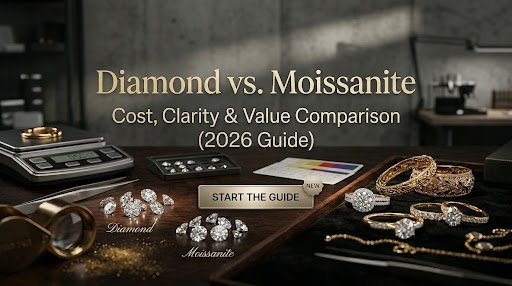
Moissanite vs Diamond: Cost, Clarity & Value Comparison (2026 Guide)
Choosing between moissanite vs diamond is no longer just about tradition—it’s about making a smart, value-driven decision. Modern buyers, especially in metro markets and global D2C segments, are evaluating gemstones based on cost efficiency, clarity, durability, and sourcing transparency rather than just legacy appeal.
This guide provides a structured, unbiased comparison to help you choose the right gemstone based on your priorities—not market perception.
What Are Moissanite and Diamonds?
Diamond: Natural, Rare & Legacy-Driven
Diamonds are naturally formed under extreme pressure over billions of years. They are deeply associated with luxury, emotional value, and cultural significance, particularly in engagement and bridal jewelry.
Moissanite: Lab-Created & Performance-Focused
Moissanite is an engineered gemstone designed to deliver maximum brilliance, durability, and affordability. Its rise in popularity is driven by consistent quality and accessibility for modern buyers.
Cost Comparison: Retail Pricing vs Real Value
Pricing is one of the biggest differentiators in the moissanite vs diamond debate.
Diamond Pricing (Retail Perspective)
- 1-carat diamond: ₹2,50,000 to ₹8,00,000+
- Price influenced by rarity, grading (4Cs), and brand markup
Moissanite Pricing (Direct & Retail)
- 1-carat equivalent: ₹15,000 to ₹40,000
- Pricing driven by production and design—not rarity
Real-World Buying Scenario
A buyer in Bengaluru compared two visually similar engagement rings:
- Diamond ring: ₹4.2 Lakhs
- Moissanite ring: ₹32,000
Decision Outcome: The buyer prioritized design, setting, and overall value, choosing moissanite and reallocating budget toward customization.
Key Insight:
- Diamonds = Perceived luxury and rarity
- Moissanite = High visual appeal with cost efficiency
Clarity & Appearance: Natural Variations vs Engineered Precision
Diamond Clarity
Natural diamonds often contain inclusions. Higher clarity grades (VS, VVS) significantly increase pricing.
Moissanite Clarity
Being lab-created, moissanite offers near-perfect clarity, with minimal visible inclusions.
Sparkle & Light Performance
- Diamond: Classic white brilliance
- Moissanite: Higher “fire” (rainbow-like reflections)
Practical Insight
In everyday lighting conditions, most people cannot distinguish between the two. However, under direct light, moissanite may appear slightly more reflective.
Takeaway:
- Diamonds = Natural uniqueness
- Moissanite = Consistent visual perfection
Durability & Daily Wear
Both gemstones are highly durable and suitable for everyday jewelry, especially rings.
| Feature | Diamond | Moissanite |
| Hardness | 10 (Mohs) | 9.25 (Mohs) |
| Scratch Resistance | Excellent | Very High |
| Longevity | Lifetime | Long-lasting |
Key Insight: While diamonds are slightly harder, real-world performance is nearly identical for daily wear.
Value Perspective: Emotional vs Functional Buying
Diamond Value Proposition
- Strong Emotional and Cultural Significance
Diamonds have long been associated with love, commitment, and tradition. They hold deep emotional value, especially in occasions like engagements, weddings, and anniversaries.
- Preferred for Milestone Purchases
Because of their symbolic importance, diamonds are often chosen for major life events. They are seen as timeless pieces that mark significant moments and memories.
- Resale Potential (Varies in Retail Markets)
Diamonds do have resale value, but it is not always as high as expected. The resale price depends on factors like quality, certification, and market demand—and often differs significantly from retail purchase prices.
Moissanite Value Proposition
- Lower Upfront Investment
Moissanite offers a significantly lower entry price compared to diamonds, making it an ideal choice for budget-conscious buyers who still want a premium-looking gemstone.
- Ideal for Fashion, Travel, and Daily Wear Jewelry
Due to its affordability and durability, moissanite is perfect for everyday use, travel jewelry, and trend-based designs where practicality matters more than long-term investment.
- Limited Resale Demand
Unlike diamonds, moissanite has a relatively small resale market. Buyers typically choose it for personal use and value rather than future resale returns.
Reality Check
Many buyers assume diamonds are strong investments—but resale value in retail markets is often lower than expected. Moissanite buyers, on the other hand, focus on usage value rather than resale.
Takeaway:
- Diamonds = Emotional + symbolic value
- Moissanite = Functional + budget-driven value
Buying Channel Matters More Than the Stone
A critical but often overlooked factor is where you buy from.
Retail Jewelry Buying
- Higher prices due to branding and overhead
- Limited customization
- Immediate availability
Direct Manufacturer-to-Consumer Buying
- Competitive pricing (30–50% savings possible)
- Full customization (CAD designs, material control)
- Better pricing transparency
Real Example
A couple in Mumbai opted for a custom ring through a manufacturer:
- Chose between diamond and moissanite
- Customized design and materials
- Saved nearly 30–50% compared to retail pricing
Key Insight:
Your buying method impacts cost as much as your gemstone choice.
When Should You Choose a Diamond?
A diamond is the right choice if:
- You value tradition and heritage
- You prefer a natural gemstone
- You’re buying for a milestone event (engagement, heirloom)
- Brand perception matters to you
When Should You Choose Moissanite?
Moissanite is ideal if:
- You have a defined budget
- You want a larger or more intricate design
- You prefer consistent clarity and brilliance
- You’re buying fashion or everyday jewelry
Step-by-Step Buying Framework (Smart Buyer Flow)
Step 1: Define Your Budget Range
- Under ₹50,000 → Strongly consider moissanite
- ₹50,000 – ₹2,00,000 → Hybrid decision (small diamond vs large moissanite)
- ₹2,00,000+ → Diamond becomes more viable
Step 2: Identify Your Purpose
- Engagement / heirloom → Diamond
- Daily wear / fashion → Moissanite
- Travel jewelry → Moissanite
Step 3: Decide What Matters Most
| Priority | Best Choice |
| Tradition & symbolism | Diamond |
| Budget efficiency | Moissanite |
| Bigger size look | Moissanite |
| Natural origin | Diamond |
| Custom design focus | Both (via manufacturer) |
Step 4: Choose Buying Channel
| Buying Method | Cost Impact | Customization | Recommendation |
| Retail Store | High | Limited | Avoid for price |
| Direct Manufacturer | Low | High | Best option |
Step 5: Final Optimization Decision
Instead of asking: “Which stone is better?”
Ask: “Which combination of stone + sourcing gives me maximum value?”
Visual Comparison Chart: Moissanite vs Diamond
| Factor | Diamond | Moissanite |
| Price (1 Carat) | ₹2.5L – ₹8L+ | ₹15K – ₹40K |
| Origin | Natural | Lab-created |
| Clarity | Natural inclusions | Near flawless |
| Sparkle | White brilliance | Rainbow fire (more sparkle) |
| Hardness | 10 (Mohs) | 9.25 (Mohs) |
| Resale Value | Moderate (varies) | Low |
| Customization | Limited in retail | High via manufacturer |
| Value Type | Emotional | Functional |
Cost Efficiency Breakdown Chart
Example Budget: ₹1,00,000
| Allocation Type | Diamond Purchase | Moissanite Purchase |
| Center Stone | ₹80,000 | ₹15,000 |
| Design & Setting | ₹20,000 | ₹50,000 |
| Customization Level | Low | High |
| Final Look | Smaller stone | Bigger + better design |
Insight: Moissanite allows budget redistribution toward design and craftsmanship, not just the stone.
Decision Matrix (Quick Selection Tool)
Use this to instantly decide:
| If You Want… | Choose… |
| Prestige & legacy | Diamond |
| Maximum visual impact under budget | Moissanite |
| Investment mindset | Diamond (with caution) |
| Everyday wearable luxury | Moissanite |
| Custom jewelry experience | Both (via manufacturer) |
Real Buyer Journey (Structured Example)
Scenario: Engagement Ring Purchase
Retail Path:
- Diamond Ring Price: ₹4.2 Lakhs
The cost reflects not just the gemstone, but also multiple added retail layers such as branding, showroom expenses, and marketing.
- Fixed Design
Options are usually limited to pre-designed collections, with minimal flexibility for customization or personalization.
- Brand Markup Included
A significant portion of the price goes toward brand value, store overheads, and promotional costs—rather than the intrinsic value of the jewelry itself.
Manufacturer Path:
- Moissanite Ring Price: ₹32,000
The cost reflects actual production value—covering materials and craftsmanship—without heavy retail markups, making it significantly more budget-efficient.
- Custom Design + CAD Approval
The buyer gets full control over the design process, including CAD (Computer-Aided Design) previews, ensuring the final piece matches their exact expectations before production begins.
- Budget Optimized for Better Craftsmanship
Instead of paying for branding, the budget is allocated toward finer detailing, improved finishing, and overall design quality—resulting in higher perceived value for the same spend.
Result:
Same visual appeal → ~85% cost savings
Key Insight Chart: What Actually Impacts Your Cost
| Factor | Impact Level |
| Gemstone choice | High |
| Buying channel | Very High |
| Brand markup | Very High |
| Customization level | Medium |
| Material selection | High |
Biggest takeaway: Buying channel (retail vs manufacturer) impacts cost as much as the gemstone itself.
Pro Buyer Strategy
Follow this optimized approach:
1. Shortlist Design Inspiration
Start by exploring different styles, settings, and trends. This helps you clearly define what you want—whether it’s minimal, vintage, or statement jewelry—before discussing with a seller or manufacturer.
2. Decide Budget First (Not Stone First)
Always fix your budget upfront. This ensures better decision-making and prevents overspending, allowing you to allocate funds strategically across stone, metal, and design.
3. Compare Diamond vs Moissanite Visually
Instead of relying only on specifications, compare both stones in real-life visuals or videos. This helps you understand differences in sparkle, size appearance, and overall look.
4. Contact Manufacturer for CAD Preview
Reach out to a reliable manufacturer who can provide CAD (Computer-Aided Design) or 3D previews. This gives you a realistic idea of how your final jewelry piece will look before production begins.
5. Customize Based on Budget Allocation
Adjust elements like stone size, metal type, and design complexity based on your budget. This step ensures you get maximum value without compromising on overall aesthetics.
6. Approve Final Design Before Production
Carefully review all specifications—design, dimensions, materials—before giving final approval. This minimizes errors and ensures the final product matches your expectations.
Conclusion: Focus on Value, Not Just the Stone
The modern buyer mindset has shifted from what to buy to how to buy smartly.
Instead of treating this as a competition, view both stones as different value propositions:
- Diamond = Legacy and emotional significance
- Moissanite = Cost efficiency and design flexibility
What truly matters:
- Your budget
- Your purpose (daily wear vs occasion)
- Your design expectations
- Your sourcing strategy
By exploring custom jewelry manufacturing, low MOQ jewelry manufacturing, and direct from manufacturer jewelry pricing, buyers can significantly optimize both cost and quality—regardless of the gemstone.
Platforms like Nakassi enable this shift by connecting buyers directly with manufacturers, offering better pricing, full customization, and a more transparent buying experience tailored for modern jewelry consumers.