What is Jewelry Casting? An Overview for Beginners
Introduction
Jewelry casting is one of the most fundamental processes in jewelry manufacturing, transforming raw metals into beautifully crafted rings, pendants, bracelets, and other pieces. For beginners or aspiring buyers, understanding casting is essential, whether you’re exploring custom jewelry manufacturing or looking for a diamond jewelry manufacturer to bring your designs to life.
This guide provides a clear overview of what jewelry casting is, how it works, its techniques, and why it’s widely used in the industry.
1. What is Jewelry Casting?
Jewelry casting is the process of shaping molten metal into a mold to create a jewelry piece. It allows jewelers to reproduce intricate designs repeatedly, which would be difficult or impossible to create by hand.
Key Benefits:
- Produces consistent and accurate designs.
- Enables complex shapes and intricate details.
- Efficient for mass production and custom pieces.
2. Common Jewelry Casting Techniques
2.1 Lost Wax Casting
- The most popular method for fine jewelry.
- Process: Create a wax model → encase in investment → melt out wax → pour molten metal into the mold.
- Ideal for rings, pendants, and intricate designs.
2.2 Sand Casting
- Metal is poured into a sand mold.
- Often used for larger, simpler pieces.
- Cost-effective but less precise than lost wax casting.
2.3 Direct Casting
- Molten metal is poured directly into a mold, sometimes using 3D-printed models.
- Suitable for rapid production or prototypes.
3. Materials Used in Jewelry Casting
Jewelry casting can work with a variety of metals, depending on the desired finish and durability:
- Gold (14K, 18K, 22K)
- Silver (Sterling or fine silver)
- Platinum
- Palladium and other alloys
Each metal has different melting points, flow characteristics, and suitability for specific designs.
4. Step-by-Step Jewelry Casting Process
Step 1: Design
- Jewelry can be designed by hand or digitally using CAD software.
- CAD allows precise measurements and detailed visualization before casting.
Step 2: Wax Model Creation
- A wax model of the jewelry is made, either by hand carving or 3D printing.
Step 3: Investment & Mold Making
- The wax model is encased in a heat-resistant plaster called investment.
- The mold is then heated to remove the wax, leaving a cavity in the exact shape of the design.
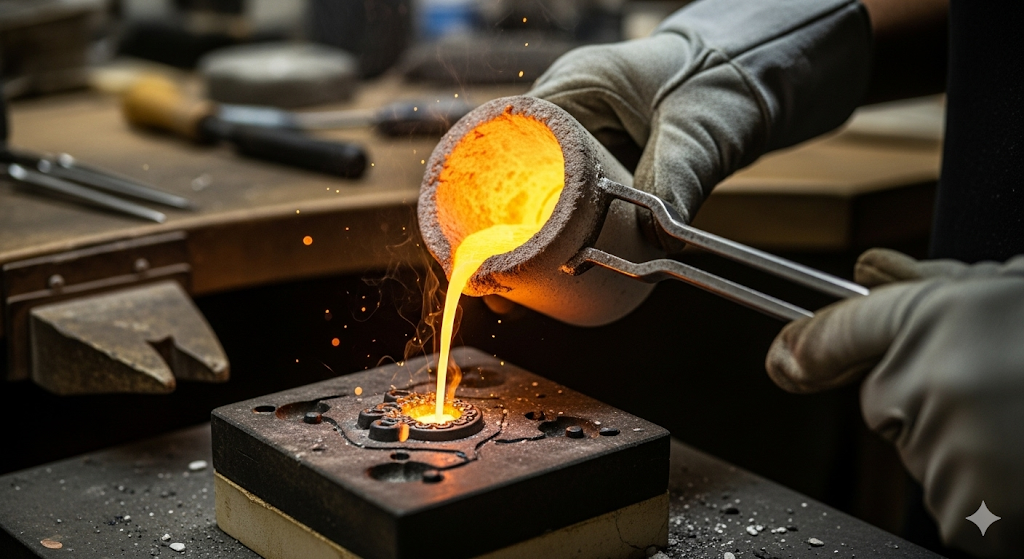
Step 4: Pouring Molten Metal
- Molten metal is poured into the cavity.
- Once cooled, the mold is broken away to reveal the rough jewelry piece.
Step 5: Cleaning & Finishing
- The raw cast is filed, polished, and prepared for stone setting or plating.
5. Advantages of Jewelry Casting
- Precision & Consistency: Ideal for creating detailed and repeatable designs.
- Cost-Effective: Efficient for both mass production and small-batch custom pieces.
- Flexibility: Works with complex, intricate designs that hand fabrication cannot easily achieve.
6. Jewelry Casting in Custom Design
Custom jewelry often relies on casting to bring unique designs to life:
- Allows for tailored rings, earrings, and pendants.
- Works seamlessly with diamond and gemstone settings.
- Helps manufacturers create heirloom-quality, one-of-a-kind pieces.
7. Choosing a Jewelry Casting Manufacturer
When selecting a manufacturer:
- Look for experience in custom jewelry casting.
- Ensure quality checks at every stage: wax models, casting, finishing.
- Ask about CAD capabilities and post-casting finishing services.
8. Trends in Jewelry Casting for 2025
- 3D Printing Integration: Streamlines the wax model creation process.
- Eco-Friendly Practices: Recycled metals and reduced material waste.
- Bespoke Casting Services: More brides and buyers prefer personalized designs over mass-produced rings.
Conclusion
Jewelry casting is the backbone of modern jewelry manufacturing. It combines artistry, precision, and efficiency to produce stunning, high-quality pieces that range from simple bands to elaborate diamond settings.
For those seeking custom jewelry, understanding casting ensures informed choices when selecting a diamond jewelry manufacturer or working on bespoke engagement rings. With skilled casting, every design—whether intricate filigree, modern solitaire, or halo setting—can be transformed into a timeless work of wearable art.

Brijesh brings a decade of experience in SEO and a deep love for jewelry to his writing. He excels at creating content that shines both on the page and in search engines, ensuring every story about gems and craftsmanship reaches the right audience.