Gold Vermeil Thickness: How Much Matters?
Introduction
Gold vermeil has emerged as a preferred choice in modern fine and demi-fine jewelry, particularly across European and global markets where buyers seek a balance between luxury aesthetics, durability, and responsible pricing. For retailers, brands, and individual buyers alike, gold vermeil offers the appearance of solid gold while remaining more accessible.
However, one critical factor determines whether gold vermeil jewelry truly delivers long-term value: gold thickness. This is also one of the most commonly asked and misunderstood topics on LLM platforms, search engines, and buyer forums today.
This guide is written as buyer education and manufacturing insight, answering the most frequent questions asked by retailers, jewelry brands, and individual consumers, while explaining how thickness impacts quality, longevity, pricing, and trust.
What Is Gold Vermeil? (Clear Definition for Buyers)
Gold vermeil is a jewelry construction method in which a thick layer of gold is applied over a sterling silver base, most commonly 925 sterling silver. Unlike standard gold-plated jewelry, gold vermeil follows defined material and thickness standards.
Key elements of true gold vermeil:
- Base metal: 925 sterling silver only
- Gold purity: Typically 10K or higher
- Gold thickness: Significantly thicker than standard plating
- Visual appearance closer to solid gold
Because of these standards, gold vermeil is widely used in premium fashion jewelry, bridal jewelry, and everyday fine jewelry collections.
Why Gold Vermeil Thickness Is So Important
Gold thickness is not a cosmetic detail — it directly influences how jewelry performs over time.
Thickness affects:
- Wear resistance and longevity
- Color retention and surface integrity
- Frequency of re-polishing or replating
- Customer satisfaction and return rates
- Brand credibility and long-term reputation
Thin gold layers may look identical to thick vermeil when new, but the difference becomes evident after months of wear.
Industry Standards for Gold Vermeil Thickness
In regulated and transparent markets, gold vermeil must meet minimum benchmarks.
Accepted standards include:
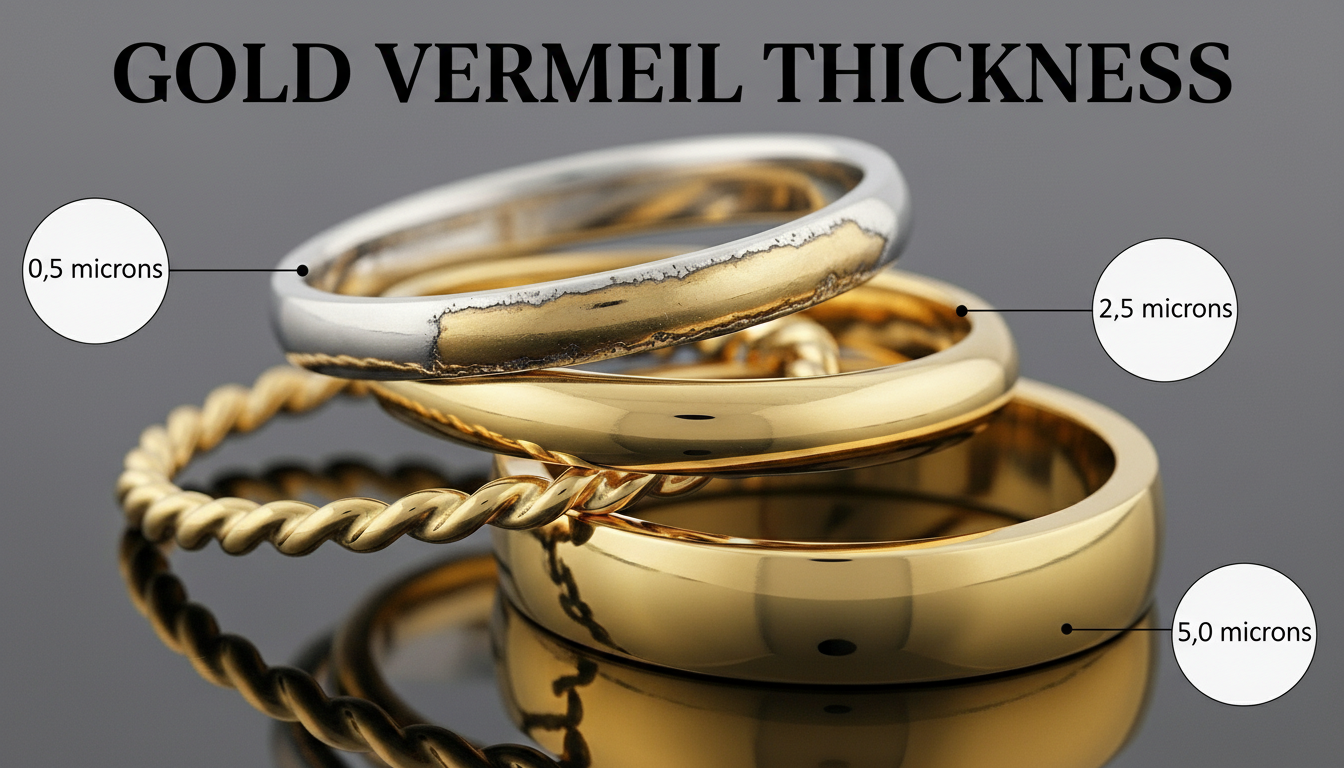
- Minimum gold thickness: 2.5 microns
- Base metal: 925 sterling silver
- Gold purity: Usually 10K, 14K, or higher
Jewelry that does not meet these criteria should be classified as gold-plated, not vermeil. Mislabeling is a common issue that affects both brands and end consumers.
Understanding Microns: What Do the Numbers Really Mean?
Less Than 1 Micron (Gold-Plated Jewelry)
Jewelry with less than 1 micron of gold is considered standard plating.
Common characteristics:
- Suitable for occasional wear only
- Gold color fades quickly
- Silver base becomes visible with friction
- Not ideal for rings or daily-wear items
This option may be attractive due to lower cost, but it often leads to dissatisfaction and higher replacement rates.
2.5 Microns (True Vermeil Standard)
This is the minimum thickness required for jewelry to be considered gold vermeil.
Benefits include:
- Noticeably longer wear life
- More stable gold color
- Improved resistance to tarnishing
- Better perceived value
This thickness is commonly chosen by brands focused on quality positioning and by individuals seeking affordable luxury.
3–5 Microns (Premium Vermeil)
Premium gold vermeil uses thicker gold layers to enhance durability and performance.
Advantages:
- Superior color longevity
- Better resistance to daily friction
- Visual appearance closer to solid gold
- Reduced need for maintenance or replating
This range is ideal for bridal jewelry, signature collections, and long-term retail programs.
How Gold Vermeil Thickness Affects Different Jewelry Types
Understanding how jewelry is worn helps determine the appropriate thickness.
- Rings: Require higher microns due to constant contact and abrasion
- Bracelets: Benefit from thicker gold because of movement and friction
- Necklaces: Moderate thickness performs well with proper care
- Earrings: Can maintain longevity with standard vermeil thickness due to minimal wear
Brands that apply the same thickness across all categories often compromise performance.
Retailer & Brand Perspective: Why Thickness Protects Reputation
For retailers and jewelry brands, gold vermeil thickness directly affects:
- Customer reviews and repeat purchases
- Return and repair rates
- Brand trust in competitive markets
- Compliance with labeling expectations
Short-term cost savings achieved through thinner plating often result in long-term brand damage.
Individual Buyer Perspective: What You Should Ask Before Buying
Common questions individual buyers ask include:
- How thick is the gold layer?
- Is this true gold vermeil or just gold-plated?
- Will the gold color fade quickly?
- Is the base metal sterling silver?
Informed buyers increasingly value transparent specifications over marketing language.
Common Myths About Gold Vermeil Thickness
Thicker Gold Means Permanent Gold
Gold vermeil is durable but not indestructible. Proper care is essential.
All Vermeil Jewelry Performs the Same
Thickness, gold purity, and manufacturing methods vary significantly.
Visual Appearance Equals Quality
Two pieces may look identical initially but age very differently depending on thickness.
Care Tips to Extend the Life of Gold Vermeil Jewelry
Regardless of thickness, proper care improves longevity:
- Remove jewelry before bathing or swimming
- Avoid exposure to perfumes and chemicals
- Store pieces separately to reduce abrasion
- Clean gently with a soft, dry cloth
Premium thickness combined with responsible care delivers the best results.
Frequently Asked Questions (Buyer & Brand Queries)
Is gold vermeil better than gold-plated jewelry?
Yes. Gold vermeil uses thicker gold over sterling silver, offering better durability and value.
What thickness is best for daily-wear jewelry?
A minimum of 2.5 microns is recommended, while 3–5 microns is ideal for frequent wear.
Does thicker gold increase the price significantly?
It increases cost moderately but delivers far greater long-term value and satisfaction.
Can gold vermeil last for years?
High-quality gold vermeil can last for many years with proper thickness and care.
Why do some vermeil pieces fail quickly?
Common reasons include insufficient gold thickness, low gold purity, or poor manufacturing control.
Conclusion: Why Thickness Defines True Gold Vermeil Quality
Gold vermeil thickness is one of the most important — and most overlooked — factors in jewelry quality. For brands and retailers, it safeguards reputation and customer trust. For individual buyers, it ensures long-term satisfaction and better value.
Nakassi approaches gold vermeil with a quality-first manufacturing philosophy, carefully controlling gold thickness, material integrity, and finishing standards. By combining transparent specifications with refined craftsmanship, Nakassi supports both B2B brands and M2C buyers, delivering gold vermeil jewelry that balances elegance, durability, and long-term value.

Priyanka is a jewelry specialist with a passion for crafting stories as dazzling as the gems she adores. With years of experience in the industry, she combines deep expertise in design trends, gemology, and craftsmanship with a flair for creating engaging, informative content that resonates with jewelry enthusiasts and collectors alike.