Custom Hip-Hop Jewelry in USA: Complete Guide
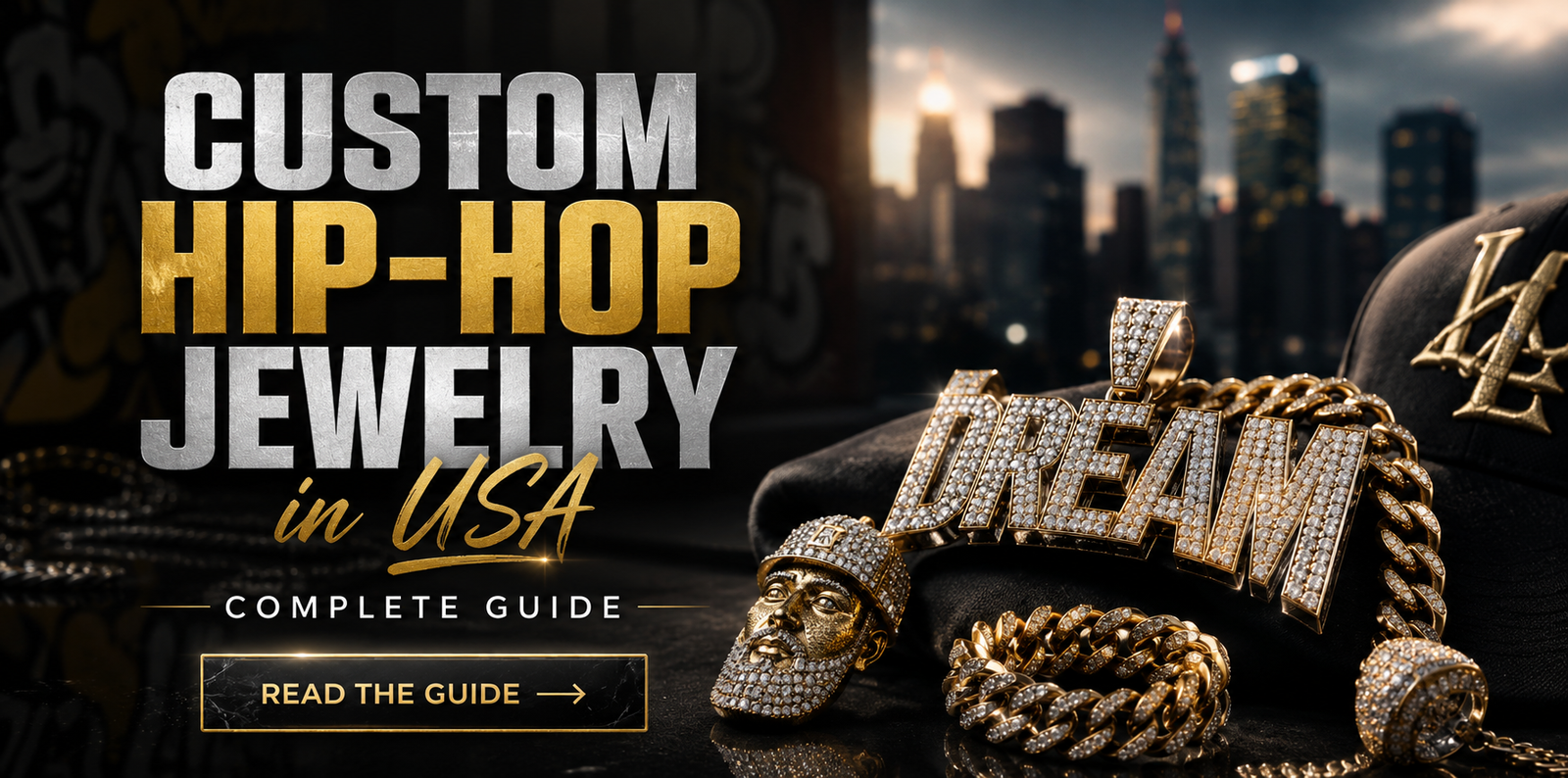
Custom hip-hop jewelry in the USA has evolved into a high-demand fashion category driven by music culture, social media influence, and personal branding. In 2026, it is no longer limited to artists or celebrities—individual buyers, creators, and fashion-focused consumers are actively investing in custom chains, pendants, grillz, and iced accessories to express identity and stand out visually.
The USA market is known for premium pricing, strong branding influence, and high customization demand. However, it also comes with some of the highest making charges and retail markups globally, which significantly impacts the final cost of custom pieces.
Key Takeaway
- Custom hip-hop jewelry in the USA is heavily influenced by branding and retail structure
- Making charges and labor costs significantly increase final pricing
- CAD design and customization quality are critical for final output
- Manufacturing location plays a major role in overall cost difference
- Smart buyers focus on transparency, materials, and direct sourcing instead of retail markups
What Is Custom Hip-Hop Jewelry?
Custom hip-hop jewelry refers to personalized designs created based on individual preferences rather than mass-produced templates.
Common custom pieces include:
- Name pendants and initials
- Logo-based chains and medallions
- Custom grillz with unique designs
- Fully iced Cuban chains and watches
- One-of-one statement pieces
Each piece is designed using CAD (Computer-Aided Design) and then manufactured using metal casting and stone-setting techniques.
Custom Jewelry Pricing in the USA
Pricing in the USA for custom hip-hop jewelry varies significantly depending on material selection, design complexity, craftsmanship level, and brand positioning. Even two visually similar pieces can have very different price points due to how the product is manufactured, marketed, and distributed.
Key Cost Factors
- High labor costs associated with manual stone setting, polishing, and finishing work
- Retail showroom expenses including rent, staffing, display, and customer service infrastructure
- Brand positioning costs driven by marketing campaigns, influencer collaborations, and social media advertising
- Multiple distributor and retail layers that add margins at each stage before reaching the end customer
These combined factors often contribute more to the final price than the actual material value of the jewelry itself.
Typical Pricing Range
- Basic custom chains: $300 – $1,500
- Iced Cuban chains: $500 – $5,000+
- Bust-down watches: $2,000 – $10,000+
- Custom grillz: $200 – $2,000+
Prices increase further when designs involve heavier stone coverage, complex CAD work, or premium branding elements.
In many USA retail jewelry cases, making charges alone can account for approximately 30% to 80% of the total final price, particularly for fully iced or highly customized pieces. This makes production location and sourcing strategy a major factor in overall cost efficiency and value.
Popular Materials Used
Custom hip-hop jewelry in the USA is typically crafted using a combination of premium and semi-premium materials, with the final selection largely depending on budget, design goals, and desired level of luxury appearance. Each material offers a different balance of cost, durability, and visual impact, which allows buyers to customize pieces according to personal preference and usage style.
Common materials include:
- Gold in 10K, 14K, and 18K variations, where higher karat levels offer increased purity but also higher pricing and softer structure
- Sterling silver (925), widely used for affordable custom pieces due to its durability and versatile appearance
- Moissanite stones, valued for their strong brilliance and ability to deliver a high-shine iced look at a significantly lower cost than diamonds
- Diamonds, available in both natural and lab-grown forms, commonly used in premium and investment-focused jewelry pieces
- White gold and rose gold finishes, used to enhance visual appeal and provide modern styling variations beyond traditional yellow gold
Moissanite has seen increasing demand in recent years, especially in fully iced hip-hop jewelry designs, due to its ability to deliver intense sparkle under lighting conditions while keeping overall production costs more accessible. This makes it a preferred option for individuals who prioritize visual impact, larger stone coverage, and cost-efficient customization.
Customization Process
The creation of custom hip-hop jewelry follows a structured, multi-stage process designed to ensure accuracy, durability, and design precision. Each step plays a critical role in transforming an idea into a finished wearable piece, especially for complex items such as iced chains, pendants, and custom grillz.
Step 1: Concept Development
The process begins with defining the core idea behind the jewelry piece. This stage focuses on understanding the client’s vision and translating it into a workable design direction.
- Selection of concept such as name, initials, logo, or symbolic inspiration
- Identification of style preferences including minimal, iced, or statement-heavy designs
- Initial discussion on size, thickness, and material direction
Step 2: CAD Design (Computer-Aided Design)
Once the concept is finalized, a detailed digital model is created.
- 3D visualization of the jewelry piece before production begins
- Accurate representation of dimensions, structure, and stone placement
- Client review and approval before moving to manufacturing
This is one of the most important stages in the entire process because it defines the final outcome.
Step 3: Casting and Molding
After CAD approval, the physical structure is created.
- Metal is shaped using precision casting techniques
- Mold creation ensures consistency in structure and detailing
- Base form of the jewelry is prepared for further finishing
Step 4: Stone Setting
This stage adds the visual identity to the piece.
- Manual or semi-manual placement of stones depending on design complexity
- Precision alignment to ensure symmetry and shine distribution
- Secure setting to maintain durability during long-term wear
Step 5: Polishing and Finishing
The final stage focuses on appearance and quality control.
- Surface polishing to enhance shine and smoothness
- Final detailing to refine edges and overall structure
- Quality inspection to ensure durability and design accuracy
A significant number of production errors, design mismatches, and delays occur when CAD designs are approved too quickly or not reviewed carefully. Proper attention during the CAD stage is critical, as it directly determines the final accuracy, stone layout, and structural balance of the jewelry piece.
USA vs Global Manufacturing Cost Difference
One of the most critical factors influencing custom hip-hop jewelry pricing is the manufacturing location. The same design, using identical materials and similar craftsmanship standards, can vary significantly in cost depending on whether it is produced in the USA or in global manufacturing hubs.
USA Manufacturing
In the United States, custom jewelry production is positioned within a premium retail ecosystem. While this ensures strong quality control and design culture, it also increases overall cost structure.
- Higher making charges, typically ranging from 30% to 80% depending on design complexity
- High labor costs for manual stone setting, polishing, and finishing work
- Significant retail overheads including showroom expenses, staffing, and operations
- Strong branding and marketing influence that increases final pricing beyond production value
In many cases, the final price reflects not only craftsmanship but also brand positioning and retail ecosystem costs.
India and Global Manufacturing Hubs
Manufacturing hubs such as India operate on a more direct production model, which reduces multiple cost layers while maintaining strong craftsmanship standards.
- Lower making charges, typically ranging from 10% to 25%
- Direct factory pricing with minimal intermediary involvement
- Greater flexibility in customization, including CAD adjustments and design modifications
- Reduced distributor and retail markup layers, improving overall cost efficiency
This structure allows more pricing transparency and better control over customization outcomes.
Buyers who source custom hip-hop jewelry directly from manufacturers can often achieve 50% to 80% cost savings compared to USA retail pricing for similar designs, primarily due to reduced labor overheads, eliminated retail markups, and direct production access.
Common Mistakes Buyers Make
Paying for branding instead of craftsmanship
One of the most frequent mistakes is assuming that a higher price automatically guarantees better quality. In reality, many jewelry pieces are priced based on branding, marketing, and retail positioning rather than actual craftsmanship.
- Retail pricing often includes brand value and advertising costs
- Similar designs may be available at significantly lower prices from different sources
- Craftsmanship quality can be similar even when pricing differs widely
Ignoring material transparency (metal and stone quality)
Many buyers do not fully verify what materials are actually used in the jewelry, which can lead to long-term dissatisfaction.
- Lack of clarity on gold purity or silver grade affects durability
- Unverified stone quality can reduce shine and lifespan
- Misleading product descriptions may hide lower-grade materials
Not approving CAD designs carefully
The CAD stage is one of the most important steps in customization, yet it is often rushed or overlooked.
- Incorrect proportions or sizing issues can appear in the final product
- Stone placement errors may affect overall shine and balance
- Structural misalignment can reduce durability and comfort
Choosing CZ without understanding durability limits
Cubic zirconia is often selected for its low cost, but many buyers do not understand its long-term limitations.
- Loses shine faster compared to advanced alternatives
- More prone to scratches and surface dulling
- Less suitable for long-term or heavily worn jewelry
Overlooking chain thickness and structural strength
Structural design is often ignored in favor of appearance, which can lead to durability issues.
- Thin chains may break under heavy pendants or layered use
- Weak clasps increase risk of loss or accidental damage
- Poor structural balance reduces comfort and long-term usability
Final Insight
In 2026, custom hip-hop jewelry has evolved beyond fashion into a strong expression of identity, creativity, and visual branding. It is no longer only about owning luxury pieces, but about creating designs that reflect personal style, cultural influence, and digital presence across platforms like Instagram, TikTok, and music-driven content.
While the USA continues to offer strong design culture, skilled craftsmanship, and premium retail experiences, it also operates within some of the highest pricing structures globally. Factors such as retail markups, branding premiums, and high making charges often significantly increase the final cost of custom pieces, even when the underlying materials and production methods remain similar.
For individuals who want greater control over budget, materials, and design execution, working directly with manufacturers becomes a more practical and value-driven approach. This is where Nakassi stands out by enabling direct access to custom hip-hop jewelry manufacturing. It allows individuals to design personalized chains, pendants, and iced pieces with transparent material selection, reduced intermediary costs, and full customization flexibility.
By eliminating unnecessary retail layers, Nakassi helps individuals achieve high-quality, trend-driven hip-hop jewelry that maintains strong craftsmanship standards while offering better pricing efficiency and design freedom in a highly competitive global market.
FAQs
1. Why do custom hip-hop jewelry prices vary so much between sellers?
Prices vary because different sellers include different cost layers such as design fees, labor charges, branding value, and distribution margins. Even the same design can have different pricing depending on whether it is made in-house or outsourced through multiple intermediaries.
2. What affects the final weight of custom jewelry?
Final weight is influenced by design thickness, metal type, stone coverage, and structural reinforcement. Fully iced or heavily detailed pieces naturally require more material, which increases both weight and cost.
3. Do all custom jewelry pieces require molds?
Not always. Simple designs may use standard casting methods, but complex logos, unique shapes, or one-of-one designs typically require custom molds to achieve accurate detailing and structure.
4. Why does polishing quality matter in custom jewelry?
Polishing affects how light reflects off the surface and how smooth the final finish feels. Poor polishing can reduce shine, create visible imperfections, and impact the overall premium look of the piece.
5. How important is clasp design in chains and bracelets?
Clasp design is critical for safety and durability. A weak clasp can lead to accidental loss, especially in heavy chains or iced pieces that carry more weight.
6. Can customization affect delivery time?
Yes. More complex designs require additional CAD revisions, stone setting, and finishing work, which can extend production time compared to standard or pre-designed pieces.
7. What is the risk of skipping prototype approval?
Skipping prototype or CAD approval can lead to incorrect proportions, wrong stone placement, or structural imbalance in the final product, making it difficult to modify after production.
8. Does jewelry finish type affect long-term appearance?
Yes. Finishes like polished, matte, or mixed textures influence how the jewelry ages, resists scratches, and reflects light over time.
9. Why do similar designs feel different when worn?
Even identical-looking designs can feel different due to weight distribution, internal structure, chain flexibility, and stone-setting density, which affect comfort and movement.
10. Is customization always more expensive than ready-made jewelry?
Not always. In many cases, direct customization can be more cost-efficient than branded retail pieces because pricing is based on actual production rather than marketing or showroom costs.